Heavy Duty Limit Switch

Limit switches are demanded in many sectors for machine, human, and work safety. Our limit switch products, which are suitable for heavy industry, are produced to withstand harsh conditions. The basic operating principle of Limit Switch is to give a signal when an object in motion leaves its motion area. It transforms mechanical effect into electrical information. The main features of the KBT NSR51 series limit switch / mechanical sensor types are high temperature resistance. It is used in many sectors such as mining, iron and steel, and conveyor systems exposed to high temperatures. It also has IP67 protection. Installation of KBT limit switches is quite easy.

Limit Switch

Limit switch, also called limit switch, is one of the important products that provide safety in the industrial field. It is at the forefront of being able to be used even in tough industrial areas and being able to withstand even high temperatures and high temperatures. During the machine or conveyor belt use of the product, also called the limit switch, it detects a part or anything that is moving in the wrong direction, and immediately intervenes. The product, which performs the necessary operations by signaling, can be used in many sectors. So much so that in many industrial areas, it has the feature of taking the necessary precautions in terms of both material and human health.
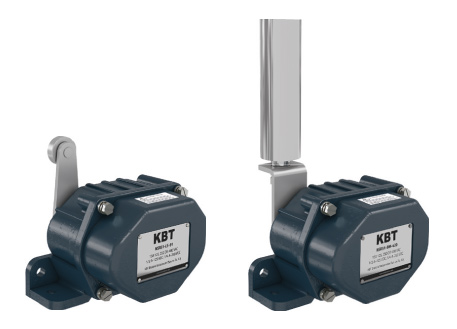
These products, which can withstand especially high temperatures, can do their job up to 190 degrees. This is the main reason why it is called as heavy industry limit switch. It is specially designed to be preferred in heavy industry where high heat is used in general.

Heavy duty limit switch products are installed on both sides of the machine or conveyor belt. Then, when there is an element that threatens the safety of both the environment, the employees and the work done, the system takes action and works instantly. The product, which does not cause any damage during assembly to the machine, does not need any special care for itself. 12 degrees is given for the out-of-line angle of a conveyor belt. At 12 degrees, the alarm warning system will be activated. However, there is no stopping at this stage. A 45-degree angle is set as the stopping angle, thus preventing a lot of damage.

The product, which is produced in full compliance with CE standards, is also used in trade. It is produced in accordance with the Russian market and also meets EAC standards. Signal light or alarm add-on is optional. These can be added or removed later. There will be no corrosion problem in the product obtained by aluminum alloy casting. The product is also produced to be resistant to water, dust and oil. The limit switch, which is ready not only for high temperature changes, but also for instantaneous temperature changes, does not show a negative reaction against vibration and shock. Its internal parts are also long-lasting, so it can be used for many years without maintenance.

Heavy-Duty Industrial Limit Switches — Technical Guide

01

Heavy-Duty Limit Switch: Operating Principle and Industry Terminology

Heavy-duty limit switches detect machine travel or end position where impact, vibration, dust or heat may exceed the capability of a standard switch. KBT offers the NSR51-LS series for demanding industrial service and a high-temperature solution for hot process areas. The actuator, contacts, operating temperature, housing strength and mounting geometry should be evaluated together.

The mechanical actuator must match the direction, speed and travel of the moving part. Electrical ratings and environmental limits must be checked in the current technical data.

Technical specifications and procurement documents commonly use “heavy-duty limit switch”, “industrial limit switch”, “high-temperature limit switch”, “heavy-service position switch” and “severe duty limit switch”. Depending on the region and the monitored function, “rugged industrial limit switch”, “high temperature position switch”, “impact resistant limit switch” and “steel mill limit switch” may also appear. These expressions overlap, but they do not make two devices interchangeable without checking actuator geometry, contacts, environmental limits and certification.

Relevant KBT product families on this category page include NSR51-LS. The model code identifies a product family; the exact actuator, contact arrangement, enclosure and certification must be confirmed from the selected version.

02

How to Select the Right Heavy-Duty Limit Switch

Selection must start with actual site data rather than a model name. Record Ambient and contact-point temperature, Impact and vibration level, Lever, roller or actuator geometry, Contact type and electrical rating and Housing, cable entry and IP protection. Compare the shortlist with the current data sheet, dimensional drawing, certificate and control architecture; do not infer an unknown rating from a similar enclosure.

  • Ambient and contact-point temperature
  • Impact and vibration level
  • Lever, roller or actuator geometry
  • Contact type and electrical rating
  • Housing, cable entry and IP protection

Exact limits, contact ratings and certification markings must be verified in the current product data sheet before ordering or commissioning. This verification applies specifically to the selected heavy-duty limit switch configuration.

03

Installation and Commissioning

Use a mounting bracket rigid enough to resist impact, and ensure the moving part meets the actuator at the permitted angle. Excess overtravel, side load or high approach speed can damage the mechanism. Commission at reduced machine speed, measuring the trip point, release point and contact sequence before recording them in the control system.

Typical sectors include steel, foundries, rolling mills, cement, mining, energy and heavy machinery.

04

Contacts, Control Logic and Functional Validation

The heavy-duty limit switch is a field device within a wider machine-control or safety function. Contact arrangement, PLC input, relay logic, alarm stage, stop stage and restart permission must be defined from the risk assessment. A contact change at the device is not sufficient proof: commissioning must confirm that the intended alarm or safe stop occurs at the machine.

Send the temperature, actuator movement and contact requirement; we will help identify the correct heavy-duty limit switch.

05

Inspection and Preventive Maintenance

Inspect lever, roller, shaft, enclosure and fixing bolts for wear or looseness. In high-temperature service, also check the cable, gland and radiant heat around the mounting point. Verify the real mechanical trip geometry as well as electrical continuity because machine-base movement can shift the operating position.

06

Troubleshooting Guide

SymptomPossible causeRecommended check
Switching point moves over timeMounting geometry, contamination or operating conditions do not match the intended response of the heavy-duty limit switch.Compare the installation with the dimensional drawing and reproduce the real operating movement under controlled conditions.
Actuator is struck too hardThe actual process condition is outside the selected sensing range, travel or delay.Measure the operating point and compare it with ambient and contact-point temperature and the current model data sheet.
Contact signal is intermittentMechanical wear, loosened fasteners, cable damage or an unsuitable electrical interface is affecting repeatability.Inspect the mechanism, mounting, cable entry, terminals and signal path separately; then repeat the functional test.
Actuator does not return freelyThe original cause has not been removed, or commissioning settings and the real machine sequence no longer agree.Isolate energy, remove the process cause and validate the complete field-device-to-machine response before restart.
07

Frequently Asked Questions

When is a heavy-duty limit switch needed?

Use one where mechanical impact, vibration, heavy dust or temperature makes a standard switch unsuitable.

How is a high-temperature model chosen?

Compare the actual site temperature, cable conditions and mounting point with the model’s rated operating range.

Why does actuator type matter?

It determines how reliably the moving part trips the switch and affects mechanical life.

Which site data must be recorded before selecting the heavy-duty limit switch?

Record Ambient and contact-point temperature, Impact and vibration level, Lever, roller or actuator geometry, Contact type and electrical rating and Housing, cable entry and IP protection. These values determine whether the actuator, enclosure, contacts and operating range fit the real duty.

How is NSR51-LS commissioned on the actual machine?

Use a mounting bracket rigid enough to resist impact, and ensure the moving part meets the actuator at the permitted angle. Excess overtravel, side load or high approach speed can damage the mechanism. Commission at reduced machine speed, measuring the trip point, release point and contact sequence before recording them in the control system. The test record should show the measured operating point and the resulting PLC, relay, alarm or stop response.

What is the most common selection error for a heavy-duty limit switch?

Choosing from the product name or enclosure alone. Ambient and contact-point temperature and Impact and vibration level must be checked together with the current drawing and data sheet.

How should the heavy-duty limit switch be included in preventive maintenance?

Inspect lever, roller, shaft, enclosure and fixing bolts for wear or looseness. In high-temperature service, also check the cable, gland and radiant heat around the mounting point. Verify the real mechanical trip geometry as well as electrical continuity because machine-base movement can shift the operating position. The interval should be shortened when previous tests show drift, contamination, impact or accelerated wear.

Can the heavy-duty limit switch be connected directly without checking the control logic?

No. For the heavy-duty limit switch, contact duty, input type, alarm and stop stages, restart conditions and fault response must be engineered for the machine and verified during commissioning.

Which KBT families can be evaluated in this category?

The relevant KBT family is NSR51-LS. Suffixes and options can change the actuator, contacts, enclosure or certification, so the complete code must be verified.

What should be documented after a functional test?

For the heavy-duty limit switch, record the model and full code, location, test condition, measured response, downstream machine action, result, date and responsible person.