Tilt Switch Probe

Tilt Switch Probes is an electro mechanical tilt switch used to detect spot lossand feed loss on conveyor belts to control the absence or density of the bulk material during flow of the primary purpose fluids.

Tilt Switch Probe

Tilt switch, also known as chute level sensor, is an important product that calculates both the density and spill slope of many fluid materials used in the industrial field during flow. Tilt level control, also known as tilt switch, is frequently used in conveyor belts. This product, which determines and detects many points such as the rate that the spilled fluid material covers on the conveyor belt, namely its density, spillage rate, is very common in the industrial field.
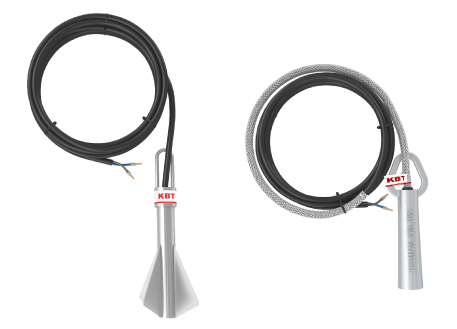
It is possible to gain an advantage in the industrial field thanks to the use of the tilt level switch, which has more than one model according to the area to be used. It is especially used in silos or hoppers where there is a high level of signal during an incorrect pouring. At the same time, the same signal is given when the flowing material accumulates. In some cases, it is possible to see blocking or piling up on conveyor belts. In this case, the alarm is activated and many material damages that may occur in the system can be prevented by giving a warning. If the material density is missing in the belt, an alarm is given so that the product deficiency can be eliminated immediately.

The variety of models depends on the need. It can be produced with or without mercury. This product, which is also known as a chute plug switch, is shaped according to the material it is obtained and coated with and according to the temperature. Although each model can be used in areas rising up to -40 degrees, the increasing degrees are separated from each other depending on the industrial area. There are alternatives of + 40 degrees, + 80 degrees and + 190 degrees. These products, which are suitable for heavy conditions, are those that have contact at 20 degrees, and there are also those that do not have this feature. In addition to such changes, whether the product is mercury-free or mercury-free, whether it has an extension plate, whether it is a cable-protected steel sleeving or a cable protection sorial tube is also among the determining factors. These products, which meet CE standards, have a place in many industrial areas.

The mercury or mercury-free tilt switch product, which is resistant to abrasions and harsh conditions, has a simple assembly process and there is an instruction manual that guides it. The product, which is very low cost, does not need special care, but it is made of quality material that can be used for a long time. The product, which is air, water or dust proof and not affected by them, is suitable for use in many different sectors.

Wide Range of Applications for Tilt Switch Probe

Tilt Switch Probes play a vital role in various bulk material handling systems, offering highly reliable solutions for monitoring and controlling material flow in industrial environments. These devices are essential in applications such as mining, cement production, grain processing, fertilizer plants, thermal power stations, and chemical industries. The primary function of the tilt level switch is to provide real-time alerts when material levels deviate from the desired range, enabling operators to take immediate corrective actions and prevent equipment damage or production loss.

The chute level sensor ensures optimal system performance by detecting material presence or absence, spillage, overfilling, or blockages. This enhances both safety and efficiency, particularly in high-demand environments where constant material flow is critical. By incorporating tilt switch probes into your conveyor systems or silos, you benefit from uninterrupted operations, extended equipment lifespan, and reduced maintenance costs.

Designed for Harsh Industrial Conditions

KBT Elektrik's Tilt Switch Probes are designed to perform under extreme working conditions. They are resistant to vibration, dust, moisture, and temperature variations. The product body can be manufactured with special coatings and sealing materials suitable for operations in environments ranging from -40°C to +190°C. This makes them ideal for use in outdoor facilities, high-temperature zones, and aggressive material handling processes.

Our tilt switch models are available with mercury or mercury-free contacts, and we provide options such as stainless steel protective tubing, extension plates, and cable-protected housings for added durability. Each model complies with CE standards and undergoes rigorous quality control tests before delivery.

Easy Installation and Maintenance-Free Operation

One of the key advantages of the tilt switch probe is its user-friendly installation. The product includes a comprehensive user manual and requires no complex configuration. Once installed, it operates with minimal maintenance requirements. Thanks to its airtight, waterproof, and dustproof design, the tilt probe offers long-term functionality without frequent servicing.

In environments where continuous material monitoring is crucial, using a tilt switch probe not only prevents potential system failures but also improves production quality. The device's cost-effective structure and long service life make it a preferred choice for companies aiming to optimize their automation and control systems.

Custom-Engineered Solutions from KBT Elektrik

At KBT Elektrik, we understand that every industrial setup has unique needs. That’s why we offer tailor-made tilt switch systems that can be adapted to your specific application. Whether you require custom probe lengths, different switching angles, or special material coatings, our engineering team will assist you in developing a solution that fits your project perfectly.

By choosing KBT Elektrik, you gain access to a team with in-depth expertise in industrial conveyor safety solutions. Our goal is to enhance your plant’s operational efficiency, minimize downtime, and provide reliable detection equipment you can trust under all working conditions.

Tilt Switch Level Sensors — Technical Guide

01

Tilt Switch Level Sensor: Operating Principle and Industry Terminology

A tilt switch detects bulk material presence or chute blockage through a change in probe angle. When material pushes the probe beyond the defined position, the system produces a control signal. KBT offers CB-39, SS-43 and MS-59 probe series plus KT-40X and other control units. Probe and controller selection should consider material density, temperature, abrasion, available space and hazardous-area requirements.

Probe length and mounting angle must place the sensing element in the actual material flow without restricting safe movement. Some probes require a compatible control unit; this must be verified by model.

Technical specifications and procurement documents commonly use “tilt switch level sensor”, “chute plug switch”, “tilt probe”, “bulk solids level switch” and “tilt switch”. Depending on the region and the monitored function, “tilt level switch”, “plugged chute detector”, “high level switch” and “material flow switch” may also appear. These expressions overlap, but they do not make two devices interchangeable without checking actuator geometry, contacts, environmental limits and certification.

Relevant KBT product families on this category page include CB-39, SS-43, MS-59 and KT-40X. The model code identifies a product family; the exact actuator, contact arrangement, enclosure and certification must be confirmed from the selected version.

02

How to Select the Right Tilt Switch Level Sensor

Selection must start with actual site data rather than a model name. Record Particle size, density and flow behaviour, Probe material and abrasion, Ambient and process temperature, Mounting clearance and probe length and Controller, delay and explosion-protection needs. Compare the shortlist with the current data sheet, dimensional drawing, certificate and control architecture; do not infer an unknown rating from a similar enclosure.

  • Particle size, density and flow behaviour
  • Probe material and abrasion
  • Ambient and process temperature
  • Mounting clearance and probe length
  • Controller, delay and explosion-protection needs

Exact limits, contact ratings and certification markings must be verified in the current product data sheet before ordering or commissioning. This verification applies specifically to the selected tilt switch level sensor configuration.

03

Installation and Commissioning

Suspend the probe at the target level so material moves it through a sufficient angle without contact with a wall or internal equipment. Process temperature, particle size, bulk density and abrasion must suit the probe construction. Commission with actual material or a safe simulation, checking trip angle, delay and control-unit output.

Applied to chutes, silos and bunkers in cement, mining, grain, feed, fertiliser, chemical and power plants.

04

Contacts, Control Logic and Functional Validation

The tilt switch level sensor is a field device within a wider machine-control or safety function. Contact arrangement, PLC input, relay logic, alarm stage, stop stage and restart permission must be defined from the risk assessment. A contact change at the device is not sufficient proof: commissioning must confirm that the intended alarm or safe stop occurs at the machine.

Share the material density, temperature, probe position and control requirement; we will help select the tilt switch system.

05

Inspection and Preventive Maintenance

Inspect the probe for build-up, bending, wear and cable damage. The suspension point must move freely and material bridging must not hold the probe permanently tilted. Where a controller is used, test input, time delay, relay output and fault behaviour together; also inspect protection integrity in Ex applications.

06

Troubleshooting Guide

SymptomPossible causeRecommended check
False high-level or blockage signalMounting geometry, contamination or operating conditions do not match the intended response of the tilt switch level sensor.Compare the installation with the dimensional drawing and reproduce the real operating movement under controlled conditions.
Material does not move the probeThe actual process condition is outside the selected sensing range, travel or delay.Measure the operating point and compare it with particle size, density and flow behaviour and the current model data sheet.
Probe remains tilted after dischargeMechanical wear, loosened fasteners, cable damage or an unsuitable electrical interface is affecting repeatability.Inspect the mechanism, mounting, cable entry, terminals and signal path separately; then repeat the functional test.
Output changes later than expectedThe original cause has not been removed, or commissioning settings and the real machine sequence no longer agree.Isolate energy, remove the process cause and validate the complete field-device-to-machine response before restart.
07

Frequently Asked Questions

What does a tilt switch detect?

It detects when bulk material tilts the probe, enabling level, material-presence or chute-blockage monitoring.

Can the probe operate alone?

It depends on the model; some systems require a compatible control unit.

How is probe length chosen?

Use the material flow zone, mounting height, particle size and the probe’s safe movement area.

Which site data must be recorded before selecting the tilt switch level sensor?

Record Particle size, density and flow behaviour, Probe material and abrasion, Ambient and process temperature, Mounting clearance and probe length and Controller, delay and explosion-protection needs. These values determine whether the actuator, enclosure, contacts and operating range fit the real duty.

How is CB-39 commissioned on the actual machine?

Suspend the probe at the target level so material moves it through a sufficient angle without contact with a wall or internal equipment. Process temperature, particle size, bulk density and abrasion must suit the probe construction. Commission with actual material or a safe simulation, checking trip angle, delay and control-unit output. The test record should show the measured operating point and the resulting PLC, relay, alarm or stop response.

What is the most common selection error for a tilt switch level sensor?

Choosing from the product name or enclosure alone. Particle size, density and flow behaviour and Probe material and abrasion must be checked together with the current drawing and data sheet.

How should the tilt switch level sensor be included in preventive maintenance?

Inspect the probe for build-up, bending, wear and cable damage. The suspension point must move freely and material bridging must not hold the probe permanently tilted. Where a controller is used, test input, time delay, relay output and fault behaviour together; also inspect protection integrity in Ex applications. The interval should be shortened when previous tests show drift, contamination, impact or accelerated wear.

Can the tilt switch level sensor be connected directly without checking the control logic?

No. For the tilt switch level sensor, contact duty, input type, alarm and stop stages, restart conditions and fault response must be engineered for the machine and verified during commissioning.

Which KBT families can be evaluated in this category?

The relevant KBT families are CB-39, SS-43, MS-59 and KT-40X. Suffixes and options can change the actuator, contacts, enclosure or certification, so the complete code must be verified.

What should be documented after a functional test?

For the tilt switch level sensor, record the model and full code, location, test condition, measured response, downstream machine action, result, date and responsible person.