Belt Misalignment Switches

Conveyor safety accessories designed to alarm and/or shut down conveyor systems in the event of a conveyor belt misalignment.The heavy duty rugged design makes them suitable for most industrial applications. The purpose of the product to reduce time loss, maintenance costs, ensure safety and reduce costs. Conveyor Belt Misalignment Switch is also called Belt Alignment Sensor.

Conveyor Belt Alignment Switch

Belt alignment switch is an important and necessary product designed to protect safety in the conveyor belt system. It performs location determination for possible damages that may occur on the conveyor belt. In addition to preventing the loss of time during error finding, it also ensures the safety of the workers. At this stage, the conveyor alignment belt switch, which should be on every conveyor belt, are robust products suitable for industrial use
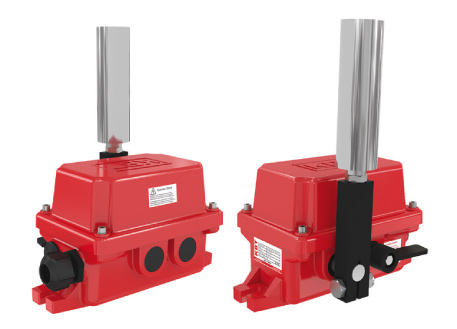
Conveyor belt alignment systems, of course, besides being a system, are also susceptible to deterioration and possible malfunctions. However, since conveyor belts have an important place both in production and in the transportation process, the deterioration of these belts or a possible error in the system prolongs the process, and while it negatively affects the cost, it can also harm many people's lives. It is possible to prevent all this with one tool. Conveyor belt alignment switch will alarm and stop the system completely in case of emergency. This avoids problems.

These switches, also known as conveyor belt misalignment switches, are open to sudden action and there is no jam or pause in the system. Conveyor belts have different types among themselves, although their materials may vary, each of them is suitable for industrial design. Products that are resistant to hit and heavy conditions may have aluminum body oil in some cases, while some may also have composite or metal casting bodies. Depending on the preference and the requirements, there are alarm and stop angle options, as well as products with 2NO/2NC contact mechanism.

As KBT Electric, all the products we produce have CE and EAC standards, there are also products with an assembly structure suitable for USA field facilities. Although this varies according to the purpose of the use and the preference in the industrial field, the purpose of each is common. The aim here is to prevent possible misalignment of the conveyor belt and to intervene immediately. Band alignment switch is also effective in this process. With the method that calculates the slope and the slip, the belt alignment problem is also solved and the system can be restarted.

The conveyor belt alignment switch (sensor) is resistant to very high temperatures and extreme cold, depending on the switch itself. In this way, it has become a product that can serve in many parts of the world and in many industrial areas. It is possible to access the necessary assembly products for this product, which is mounted on the body, by contacting us.

Application Areas and Usage Advantages

Conveyor Belt Misalignment Switches are widely used in sectors where continuous material flow is essential, such as mining, cement production, iron and steel facilities, thermal power plants, ports, and logistics centers. These switches, which are mounted along the conveyor line, can be positioned at critical points to immediately detect and respond to any belt deviation. In systems where 24/7 operation is required, this product significantly contributes to uninterrupted production.

In addition to preventing belt damage, these switches reduce downtime, minimize repair needs, and protect equipment. This ensures a safer working environment while also extending the life of conveyor systems. Thanks to their modular structure, they can be easily integrated into both new and existing systems.

Technical Specifications and Design Flexibility

KBT Elektrik's Conveyor Belt Alignment Switches are designed with user safety and industrial durability in mind. Depending on customer demands, products with different enclosure protection levels such as IP65 or IP67 can be offered. Models suitable for use in ATEX environments (explosive atmospheres) are also available.

Mechanical parts such as adjustable roller levers and flexible arm structures ensure precise detection of belt misalignment. The response angle of the switch can be customized to 15°, 20°, or 30°, according to the system's needs. Furthermore, the contact structure options—such as 1NO+1NC, 2NO+2NC—enable flexible integration with different control systems.

Why Choose KBT Elektrik Belt Misalignment Switches?

With its extensive experience in conveyor safety systems, KBT Elektrik offers high-performance solutions tailored to the needs of industrial facilities. Each product is subjected to quality control tests before delivery and is produced in compliance with international standards such as CE, EAC, and UKCA.

We also provide custom design and engineering support to ensure compatibility with your existing systems. Our technical team is always ready to assist with installation, commissioning, and after-sales support.

For more information about Conveyor Belt Misalignment Switches and other conveyor safety accessories, you can contact KBT Elektrik’s expert team or request a catalog.


Conveyor Belt Misalignment Switches — Technical Guide

01

Conveyor Belt Misalignment Switch: Operating Principle and Industry Terminology

A conveyor belt misalignment switch detects lateral belt movement through a roller lever and provides an alarm or stop signal before the deviation causes greater damage. Early detection helps protect belt edges, pulleys, structure and conveyed material. KBT offers composite and aluminium housings, different contact arrangements and standard or ATEX versions. Selection should reflect the mounting position, environmental protection and the required alarm/stop stages.

Switches are normally positioned on both sides of the belt at critical transfer or pulley points. The trip angle and control logic must be coordinated with the conveyor’s safe operating sequence.

Technical specifications and procurement documents commonly use “conveyor belt misalignment switch”, “belt alignment switch”, “conveyor belt drift switch”, “belt misalignment switch” and “conveyor belt alignment switch”. Depending on the region and the monitored function, “belt misalignment sensor”, “belt drift switch”, “conveyor belt tracking switch” and “belt alignment sensor” may also appear. These expressions overlap, but they do not make two devices interchangeable without checking actuator geometry, contacts, environmental limits and certification.

Relevant KBT product families on this category page include NSR22-BM, TPR22-BM, NSR66-BM and NSR55-BM. The model code identifies a product family; the exact actuator, contact arrangement, enclosure and certification must be confirmed from the selected version.

02

How to Select the Right Conveyor Belt Misalignment Switch

Selection must start with actual site data rather than a model name. Record Single-stage stop or two-stage alarm and stop, Composite or die-cast aluminium housing, Required IP protection, Contact count, lever geometry and mounting dimensions and ATEX certification for combustible-dust areas. Compare the shortlist with the current data sheet, dimensional drawing, certificate and control architecture; do not infer an unknown rating from a similar enclosure.

  • Single-stage stop or two-stage alarm and stop
  • Composite or die-cast aluminium housing
  • Required IP protection
  • Contact count, lever geometry and mounting dimensions
  • ATEX certification for combustible-dust areas

Exact limits, contact ratings and certification markings must be verified in the current product data sheet before ordering or commissioning. This verification applies specifically to the selected conveyor belt misalignment switch configuration.

03

Installation and Commissioning

Install the switch where normal belt movement will not create nuisance trips but hazardous lateral deviation is detected early. Keep the sensing roller square to the belt and protect it from direct impact by falling material. During commissioning, move the belt in a controlled manner to both sides and verify alarm angle, shutdown angle, PLC inputs and the safe restart sequence.

Used on belt conveyors in mining, cement, steel, power, ports, grain, fertiliser and chemical plants.

04

Contacts, Control Logic and Functional Validation

The conveyor belt misalignment switch is a field device within a wider machine-control or safety function. Contact arrangement, PLC input, relay logic, alarm stage, stop stage and restart permission must be defined from the risk assessment. A contact change at the device is not sufficient proof: commissioning must confirm that the intended alarm or safe stop occurs at the machine.

Send the belt width, mounting position and alarm/stop logic; we will help select the appropriate misalignment switch.

05

Inspection and Preventive Maintenance

Inspect roller surface, bearing movement, lever return and mounting hardware. Material build-up or a worn roller can change the detection angle and cause late or false operation. A functional test must verify not only lever movement but also correct processing of the alarm and conveyor shutdown outputs.

06

Troubleshooting Guide

SymptomPossible causeRecommended check
Repeated alarm on one sideMounting geometry, contamination or operating conditions do not match the intended response of the conveyor belt misalignment switch.Compare the installation with the dimensional drawing and reproduce the real operating movement under controlled conditions.
Misalignment detected too lateThe actual process condition is outside the selected sensing range, travel or delay.Measure the operating point and compare it with single-stage stop or two-stage alarm and stop and the current model data sheet.
Roller or lever does not returnMechanical wear, loosened fasteners, cable damage or an unsuitable electrical interface is affecting repeatability.Inspect the mechanism, mounting, cable entry, terminals and signal path separately; then repeat the functional test.
Signal changes during normal belt movementThe original cause has not been removed, or commissioning settings and the real machine sequence no longer agree.Isolate energy, remove the process cause and validate the complete field-device-to-machine response before restart.
07

Frequently Asked Questions

Where should belt misalignment switches be installed?

They are generally installed on both belt sides and at critical pulley or transfer areas in accordance with the mounting instructions.

What is two-stage detection?

The first lever movement may be used for an alarm and the second for a stop, depending on the model and control circuit.

Does a dusty site always require ATEX?

ATEX is required when the site is formally classified for an explosive dust atmosphere, not simply because dust is present.

Which site data must be recorded before selecting the conveyor belt misalignment switch?

Record Single-stage stop or two-stage alarm and stop, Composite or die-cast aluminium housing, Required IP protection, Contact count, lever geometry and mounting dimensions and ATEX certification for combustible-dust areas. These values determine whether the actuator, enclosure, contacts and operating range fit the real duty.

How is NSR22-BM commissioned on the actual machine?

Install the switch where normal belt movement will not create nuisance trips but hazardous lateral deviation is detected early. Keep the sensing roller square to the belt and protect it from direct impact by falling material. During commissioning, move the belt in a controlled manner to both sides and verify alarm angle, shutdown angle, PLC inputs and the safe restart sequence. The test record should show the measured operating point and the resulting PLC, relay, alarm or stop response.

What is the most common selection error for a conveyor belt misalignment switch?

Choosing from the product name or enclosure alone. Single-stage stop or two-stage alarm and stop and Composite or die-cast aluminium housing must be checked together with the current drawing and data sheet.

How should the conveyor belt misalignment switch be included in preventive maintenance?

Inspect roller surface, bearing movement, lever return and mounting hardware. Material build-up or a worn roller can change the detection angle and cause late or false operation. A functional test must verify not only lever movement but also correct processing of the alarm and conveyor shutdown outputs. The interval should be shortened when previous tests show drift, contamination, impact or accelerated wear.

Can the conveyor belt misalignment switch be connected directly without checking the control logic?

No. For the conveyor belt misalignment switch, contact duty, input type, alarm and stop stages, restart conditions and fault response must be engineered for the machine and verified during commissioning.

Which KBT families can be evaluated in this category?

The relevant KBT families are NSR22-BM, TPR22-BM, NSR66-BM and NSR55-BM. Suffixes and options can change the actuator, contacts, enclosure or certification, so the complete code must be verified.

What should be documented after a functional test?

For the conveyor belt misalignment switch, record the model and full code, location, test condition, measured response, downstream machine action, result, date and responsible person.